
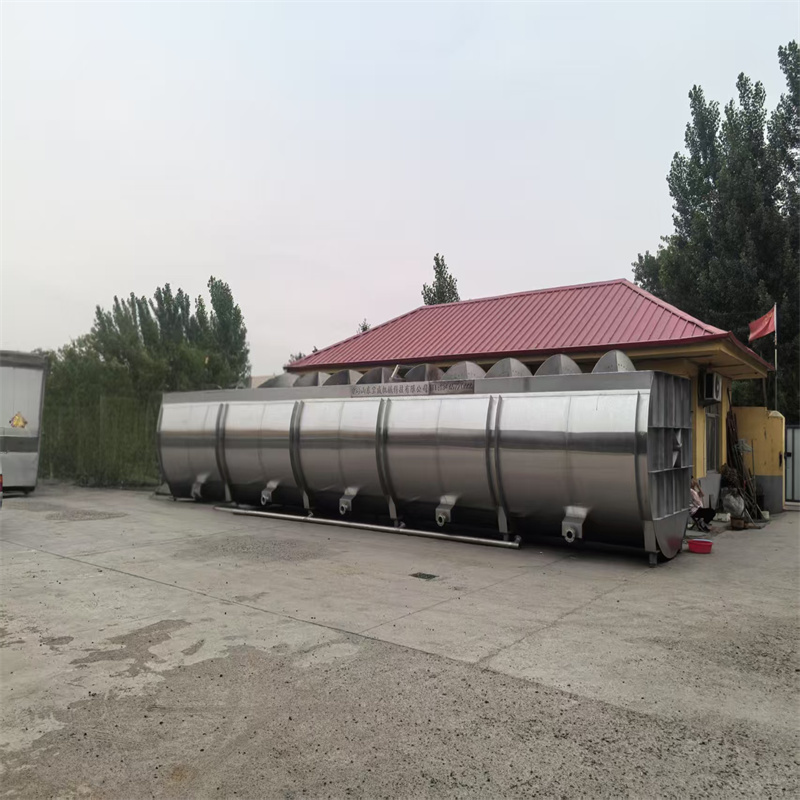
Shandong Baowei Duck Feather and Down Water Separator
- Commodity name: Shandong Baowei Duck Feather and Down Water Separator
- Detailed description
-
Bao Wei Brand Duck Feather and Down Water Separator: A Game-Changer in the Poultry Processing Industry That Enables Wastewater Reuse
In the poultry slaughter and processing industry chain, the duck feather-water separator—a key piece of equipment that links the plucking process with subsequent processing—is reshaping industry production patterns with its highly efficient dewatering performance. This specialized device, which employs centrifugal separation technology, physically removes free moisture from wet duck feathers rapidly. Not only does it provide high-quality raw materials for downstream industries such as down products and feed processing, but it also demonstrates significant advantages in energy conservation, emission reduction, and improved production efficiency.
## I. Technical Principles and Core Structure
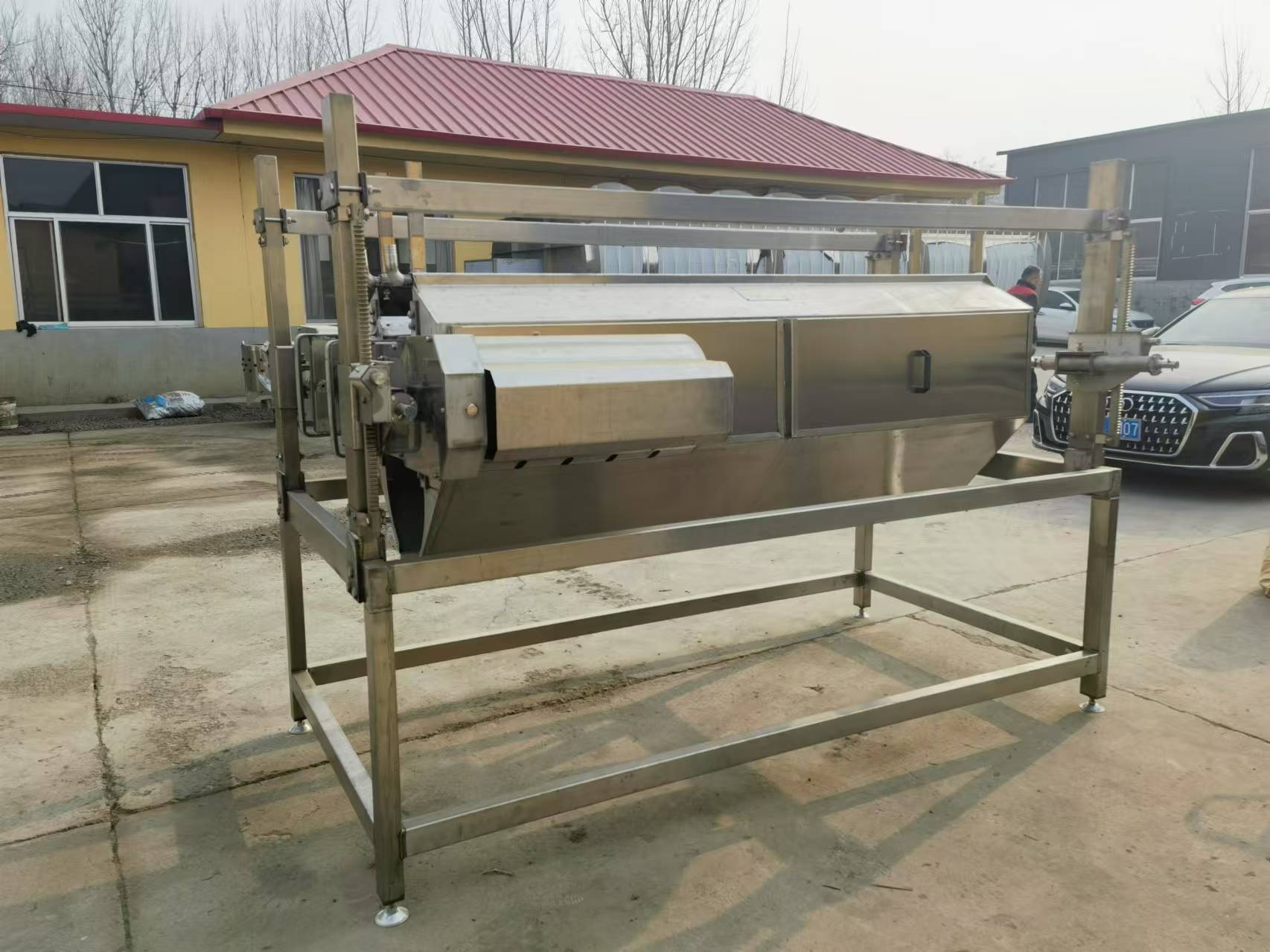
The core working principle of the duck feather-water separator is based on centrifugal separation technology. After wet duck feathers that have undergone plucking and cleaning are fed into a high-speed rotating stainless steel drum, the powerful centrifugal force causes the feathers to be flung against the inner wall of the drum and adhere tightly to it, while the water is expelled through the dense mesh holes in the drum’s side walls. This process is similar to the spin-drying function of a washing machine, but it has been specially optimized for the unique physical properties of feathers.
The typical equipment features a three-point suspension structure. This design effectively distributes the vibrations generated by the rotating drum through three support points, ensuring stable operation even under full-load conditions. As the core component, the drum is typically made of 304 or 316L stainless steel, which not only meets corrosion-resistant requirements but also withstands the stresses induced by high-speed rotation. The matching between the drum diameter and rotational speed has been precisely calculated; for instance, in one particular model, the drum diameter reaches 500 mm, and the rotational speed can reach up to 960 rpm, guaranteeing efficient dewatering while minimizing excessive damage to the feathers.
## II. Performance Advantages and Economic Benefits
Compared to traditional natural air-drying or simple squeezing and dehydration methods, the feather-water separator demonstrates three core advantages:
1. **Efficiency Boost**: Experimental data show that centrifugal dehydration for just 2 minutes can remove more than 80% of the free moisture from feathers, whereas traditional drying methods require 20 minutes to achieve the same result. Taking a processing plant that handles 5 tons of wet feathers per day as an example, using a separator can reduce drying energy consumption by 65%, resulting in annual electricity cost savings exceeding 200,000 yuan.
2. **Quality Assurance**: The centrifugal force generated by high-speed rotation is evenly distributed across each feather, preventing protein denaturation caused by localized overheating. A comparison conducted by a down product manufacturer revealed that duck feathers processed by the separator showed a 15% increase in fluffiness and achieved an international export standard for cleanliness (down content ≥90%).
3. **Space Optimization**: After dehydration, the moisture content of feathers drops from 70% to below 25%, and their volume is reduced by approximately 60%, significantly lowering warehousing and transportation costs. After a large-scale slaughterhouse introduced a separation machine, the area required for temporary storage was reduced by 40%, and the rate of mold-related losses fell from 3% to 0.5%.
## III. Application Scenarios and Selection Guide
In different segments of the industrial chain, feather-water separators exhibit a variety of application forms:
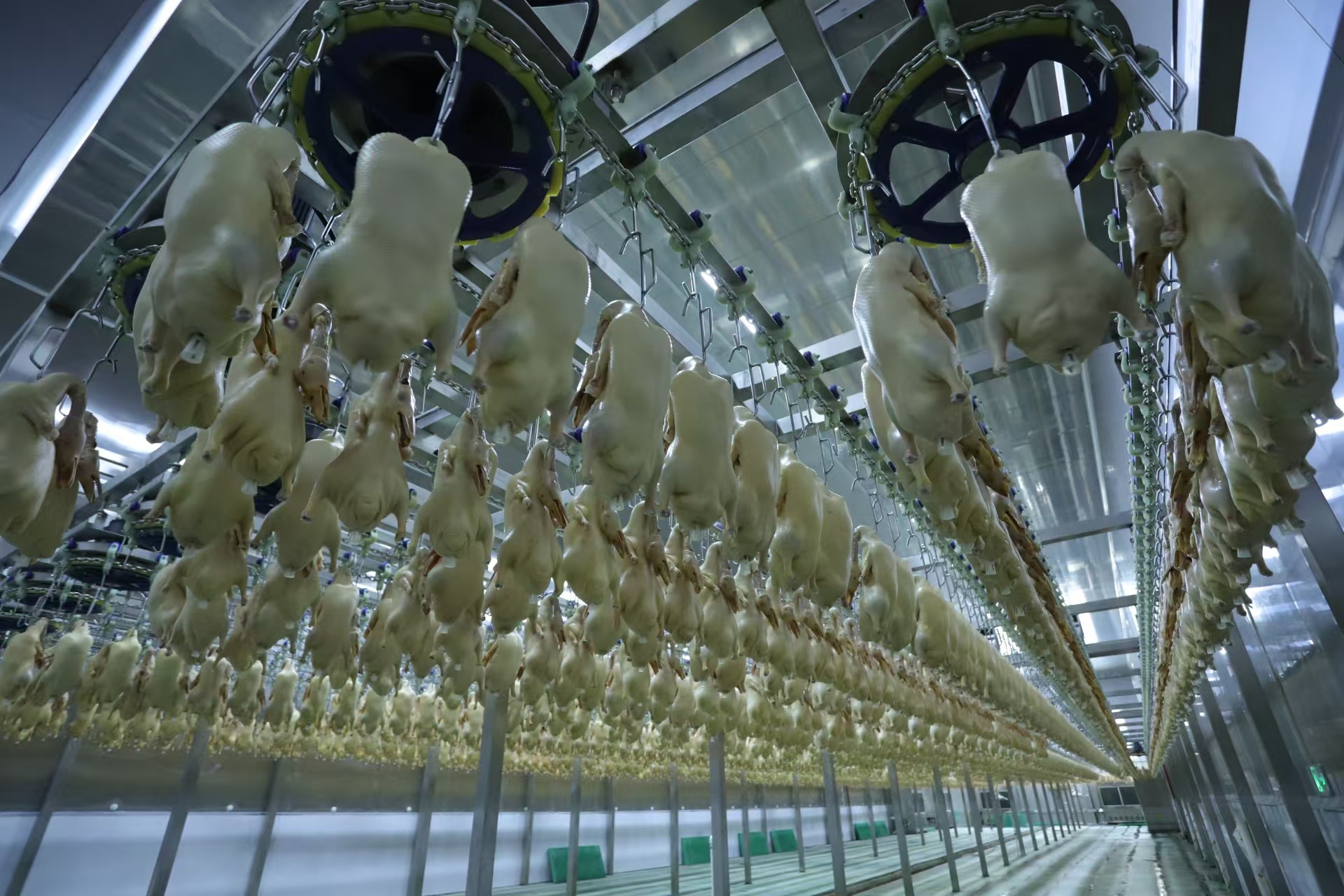
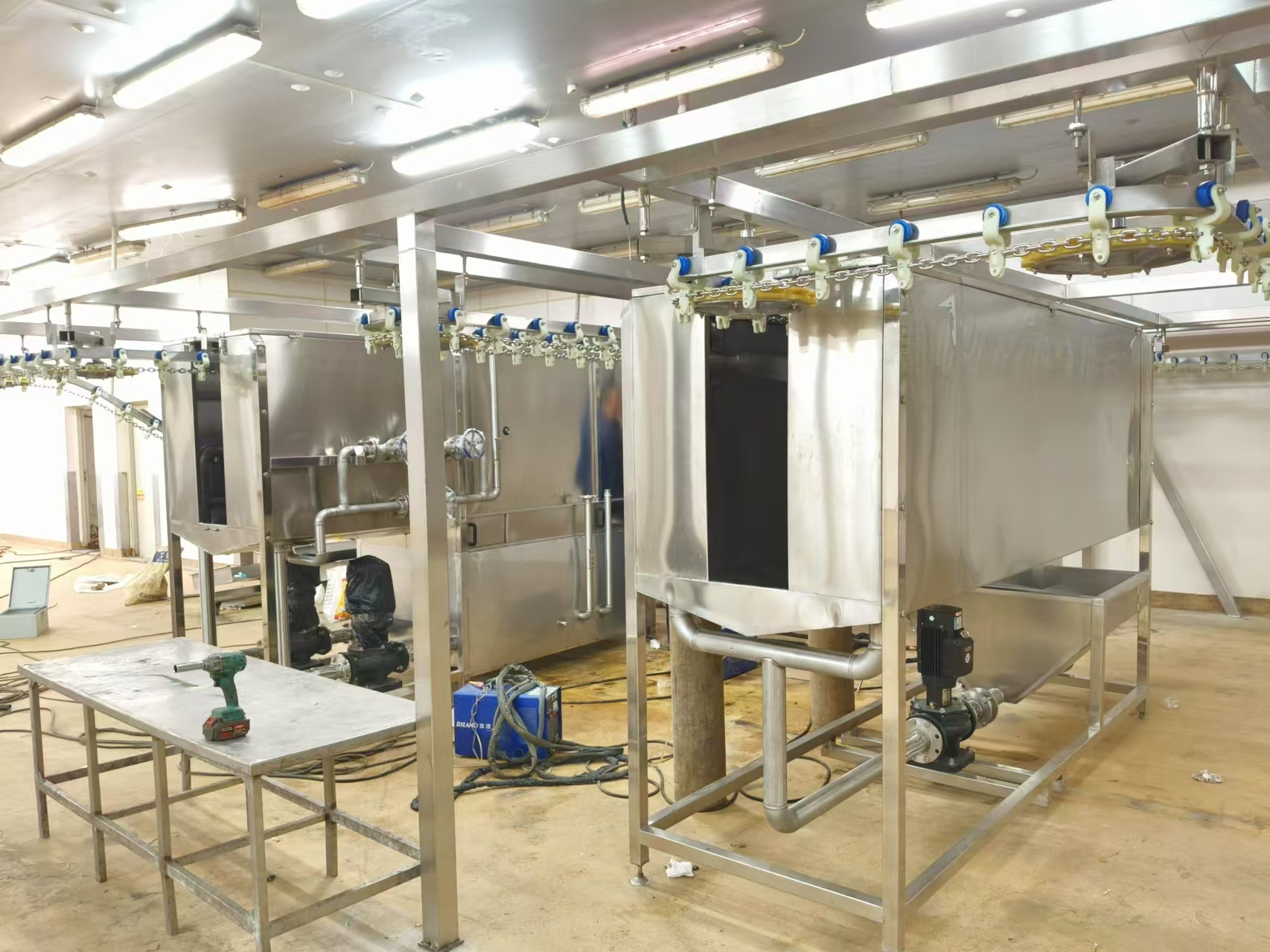
- **Slaughtering and Processing End**: Integrated with plucking machines and scalding machines to form an automated production line, capable of processing up to 8,000 birds per hour per shift.
- **Down Processing Stage**: High-end separators are equipped with variable-frequency speed control, allowing adjustment of the rotation speed according to the type of down (such as duck down or goose down). One particular brand of equipment achieves a fine separation with a down fluff integrity rate exceeding 92% by offering an adjustable speed range from 800 to 1,200 rpm.
- **Environmental Treatment End**: The separated wastewater has a solid content of 15% to 20% and can be directly fed into the feather washing wastewater treatment system. A heating-type separator adopted by a Liaoning-based enterprise uses an 85℃ hot-water circulation system to achieve preliminary disinfection while dehydrating, thereby reducing subsequent treatment costs.
When selecting equipment, three key parameters should be given primary attention: processing capacity (it is recommended to configure the system at 1.2 times the daily processing volume), dewatering efficiency (excellent performance is achieved when the moisture content is reduced to below 30%), and material corrosion resistance (the salt-spray test must meet the standard of 480 hours). A separator manufactured by a company in Zhucheng features a double-layer stainless steel structure: the inner layer, made of 316L material, is designed to withstand acidic environments, while the outer layer, made of 304 material, helps reduce equipment costs. The separator boasts a service life of over 8 years.
Key words:
Shandong Baowei Duck Feather and Down Water Separator
Get Quote


Company Address:
Huangtuan Industrial Park, Renmin East Road, Zhucheng City, Shandong Province
Phone website