
Shandong Baowei Peking Duck Production Line (Beifeng Duck Farm) - Full Video
- Commodity name: Shandong Baowei Peking Duck Production Line (Beifeng Duck Farm) - Full Video
- Detailed description
-
# Complete Video of the Shandong Baowei Peking Duck Production Line: A Technological Journey from Raw Materials to Finished Product
Today, as traditional cuisine and modern industry are deeply integrated, the Beijing roast duck—a classic dish steeped in thousands of years of culinary culture—is now undergoing standardized, fully automated production—from raw material processing to finished-product packaging—thanks to the intelligent production line developed by Shandong Baowei Machinery & Technology Co., Ltd. Recently, a video documenting the entire production process has sparked widespread discussion online, not only showcasing the advanced level of China’s food-processing equipment but also highlighting the boundless potential that arises from combining traditional craftsmanship with cutting-edge technology.
## I. The Core Link in the Production Line: The Transformation from Live Poultry to Bleached Ducks
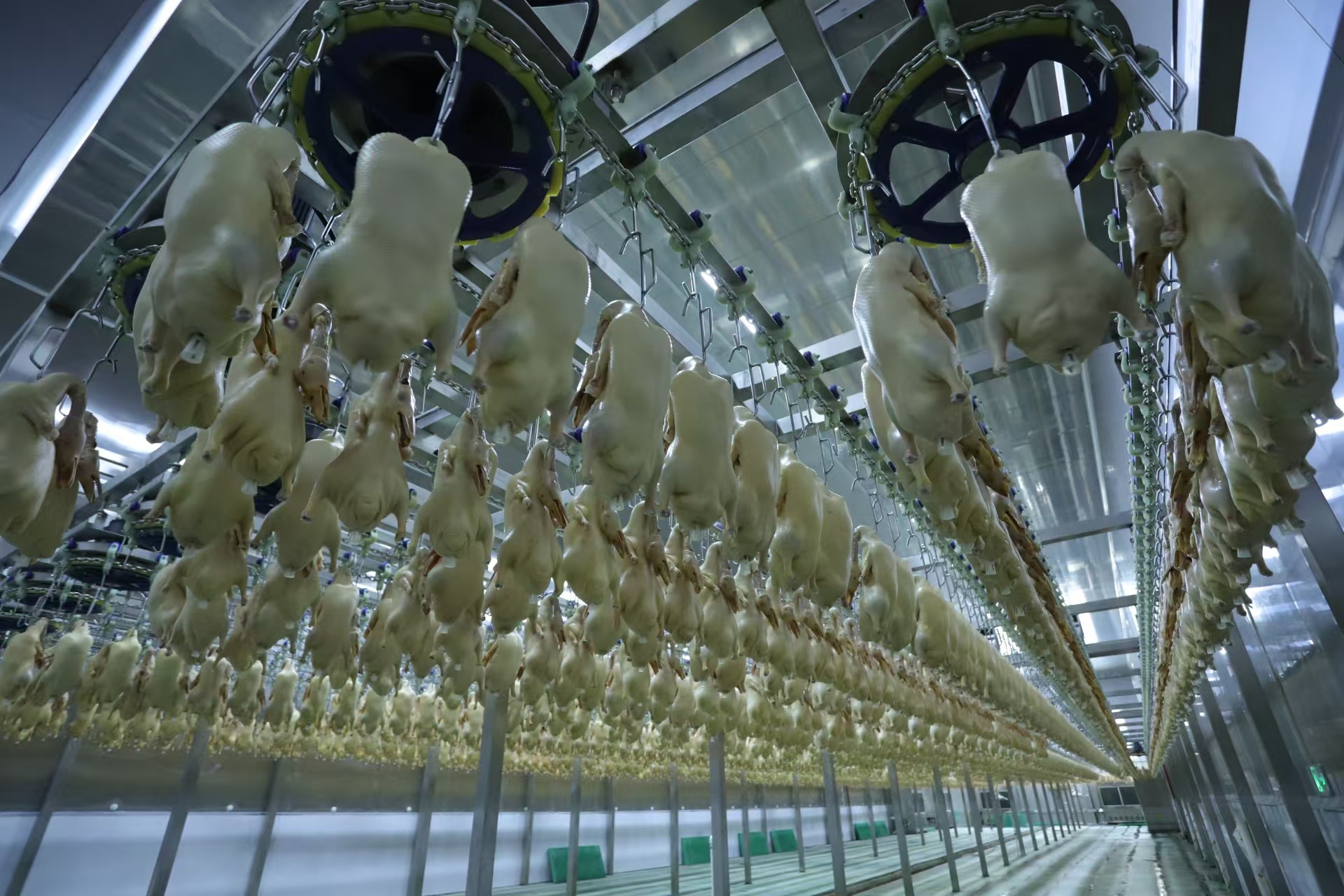
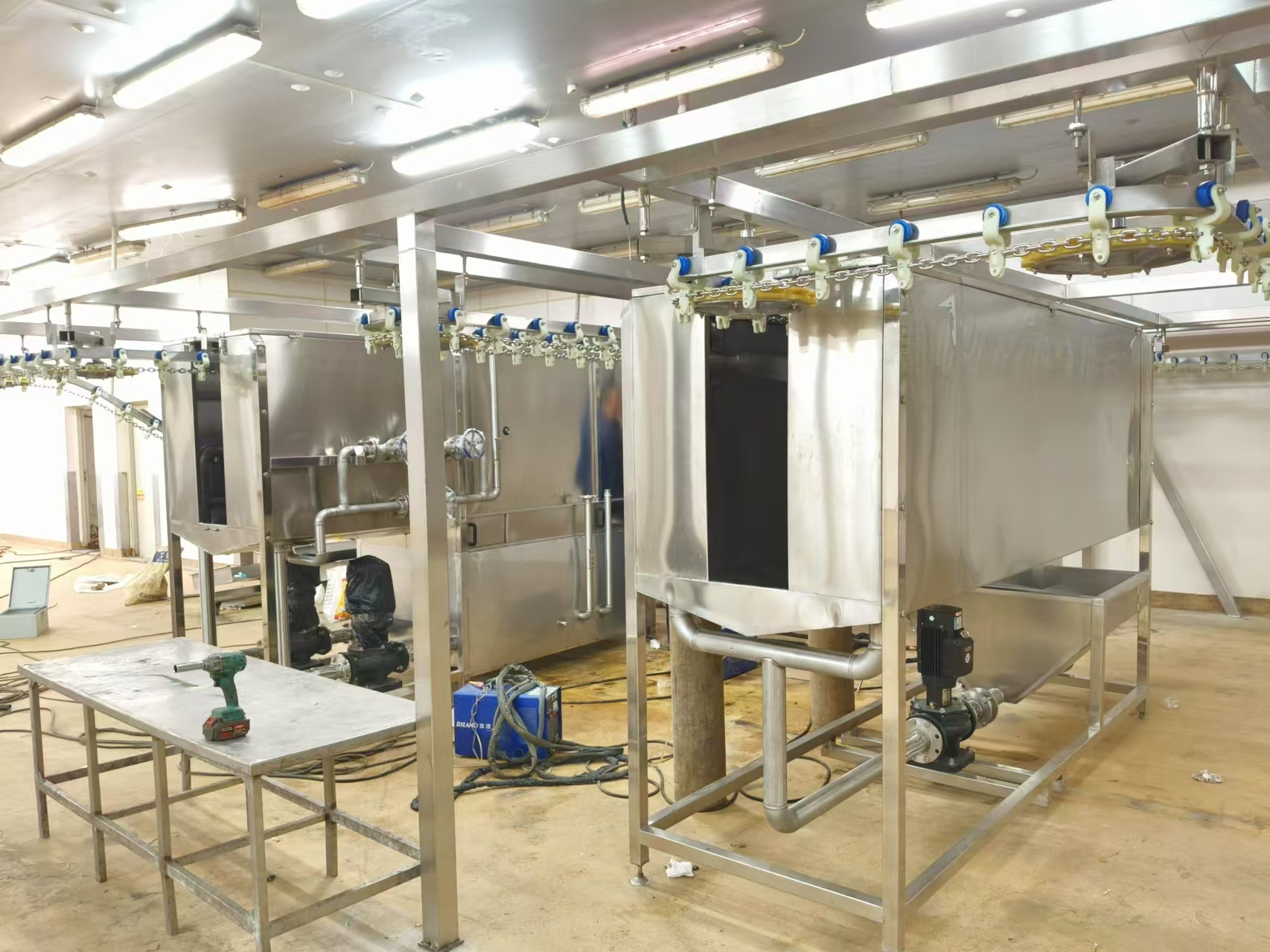
The video begins by focusing on the installation site of the Shandong Baowei chicken, duck, and goose slaughtering production line, showcasing the entire process—from assembly to commissioning. This production line is designed around the core principles of “intelligence, efficiency, and zero pollution,” and comprises four key modules: slaughtering, plucking, evisceration, and pre-cooling.
During the slaughtering process, the equipment employs electrical stunning technology to ensure painless handling of poultry, thereby meeting animal welfare standards. The plucking system, meanwhile, uses the synergistic effect of multiple spiral rubber rollers and steam spraying to remove all feathers from the bird’s body within 30 seconds, achieving a feather removal rate as high as 99.5%. The video specifically showcases our independently developed “double-layer rotary conveyor belt,” which, through synchronized operation of its upper and lower layers, boosts processing efficiency to three times that of conventional methods.
The evisceration stage is a technological highlight of the production line. Equipped with an AI-powered visual recognition system, the device can precisely locate the position of internal organs within the poultry. Coupled with an automatic gutting machine and a vacuum-based waste removal system, it completes organ separation and cavity cleaning within just 15 seconds, effectively preventing cross-contamination. In the video, operators need only activate one-button control, and the entire process runs smoothly and efficiently like a finely tuned mechanical system, with a single production line capable of handling up to 2,200 birds per day.
## II. Preparation of the Roasted Duck Blank: A Technological Replication of Traditional Techniques
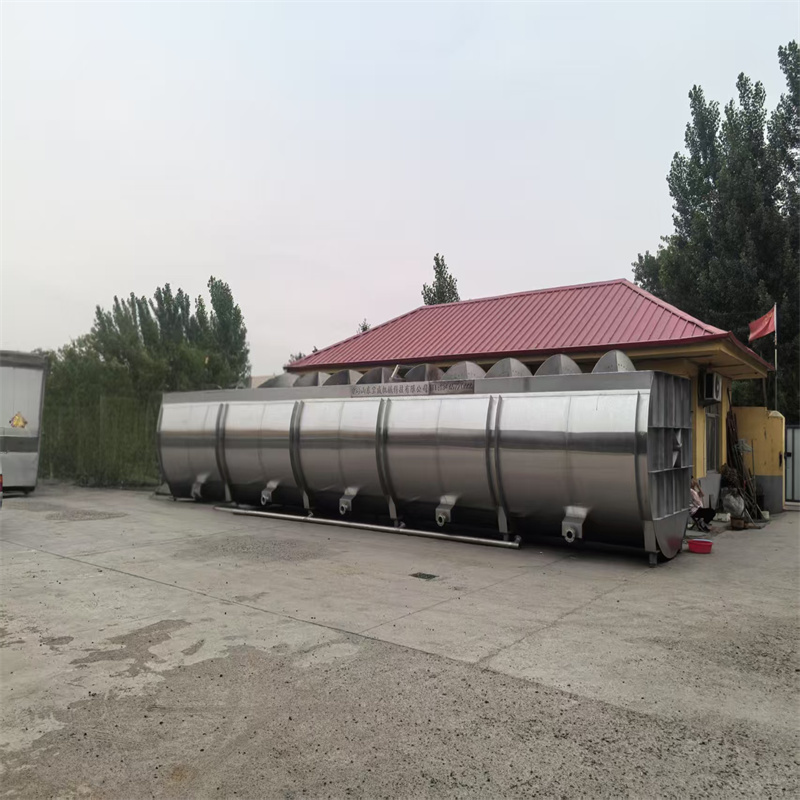
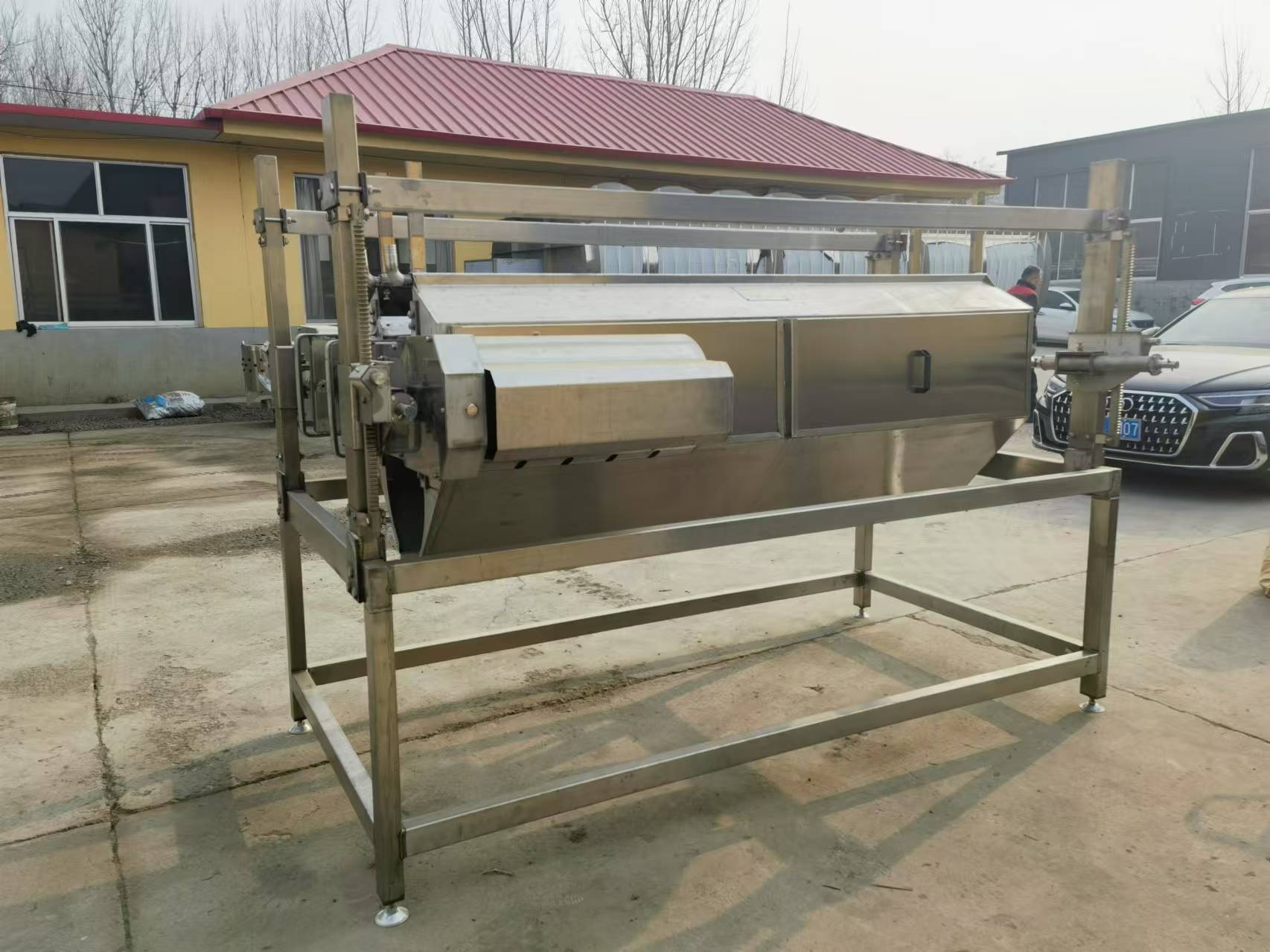
The partially processed white-strip ducks immediately enter the stage of preparing the roast duck blanks. The “blanching machine” custom-made by Shandong Baowei for Beijing roast duck has become a key piece of equipment. This machine operates on a 380V industrial power supply and boasts a power output of 11 kW. Equipped with an intelligent temperature-control system, it precisely maintains the water temperature at 65℃ ± 1℃. Combined with a rotating spray device that mimics manual flipping, the machine ensures even heating and shrinkage of the duck skin, laying the foundation for the signature “glassy-crisp skin.”
In the video, technicians demonstrate the operation procedure of the scalding machine: White-striped ducks are hung on custom-made hooks and then fed into a stainless steel chamber measuring 4 meters long and 1.6 meters wide. Once started, the machine automatically completes the entire process—water filling, heating, spraying, and draining—and can handle up to 500 ducks per hour in a single batch. Compared to traditional manual scalding, this equipment not only boosts efficiency fivefold but also ensures that the skin thickness of each duck embryo remains within an error margin of no more than 0.2 millimeters through standardized parameter control, laying a solid quality foundation for subsequent roasting.
## III. Deep Processing and Packaging: The Last Mile from the Workshop to the Dining Table
Once the duck embryos have undergone blanching, they proceed to the advanced processing stage. Shandong Baowei’s vacuum marinating production line utilizes negative-pressure penetration technology to evenly inject specially formulated marinades into the duck meat tissue. This reduces the marinating time from the traditional 48 hours to just 8 hours, while also increasing the depth of flavor penetration by 30%. The “large-scale automatic vacuum marinating production line” shown in the video features a modular design that allows it to handle duck embryos of various sizes simultaneously. Equipped with an online track-based grading and weighing system, it ensures precise sorting, with a daily production capacity exceeding 5,000 ducks.
The packaging process is equally brimming with technological sophistication. The equipment integrates metal detection, vacuum sealing, and nitrogen-flushing functions, enabling quick-freezing at -18°C to lock in freshness and extend the product’s shelf life to 12 months. At the end of the video, boxes of roasted duck blanks—each bearing the logos of partner brands such as “Quanjude” and “Dongfeng Group”—are loaded onto trucks for shipment, highlighting Shandong Baowei’s leading position in the industry.
## IV. Industry Benchmark: The Confidence Behind Serving 80% of Peking Duck Pastry Suppliers
As a leading enterprise in China’s poultry processing equipment sector, Shandong Baowei has provided equipment services to more than 80% of Beijing roast duck producers. Its client list includes well-known companies such as Quanjude, Leshou Group, and New Hope Liuhe. The video reveals that the “spiral pre-cooling machine” technology—developed by its R&D team over a period of three years—utilizes a countercurrent chilled-water circulation system to reduce the core temperature of duck carcasses to 4°C within just 15 minutes. This technology is 40% more energy-efficient than the traditional ice-water immersion method and also prevents moisture from seeping in, thereby preserving the duck’s texture and flavor.
In addition, in the video, Dong Jianwei, Chairman of the company, emphasized: “We don’t just provide equipment—we offer complete solutions.” From workshop layout design and operator training to equipment maintenance and process optimization, Shandong Baowei has established a service system that covers the entire product lifecycle. It is precisely this “turnkey project” model that has enabled the company to secure long-term partnerships with major agri-industrial enterprises such as Dongfeng Group and Yike Group.
## V. Future Outlook: The Industrial Revival of Traditional Cuisine
The viral success of this video not only highlights Shandong Baowei’s technological prowess but also sparks reflection on the industrialization of traditional culinary arts. When a time-honored craft like roast duck—traditionally reliant on the “skill of master craftsmen”—can be standardized and replicated via assembly lines, does that signal a dilution of cultural heritage? In response, the technical director featured in the video offered this insight: “We’ve retained the core process parameters—such as the temperature for scalding the duck carcass and the marinade recipe—while the equipment merely takes over repetitive tasks. The soul of quality, however, remains firmly in human hands.”
Today, Shandong Baowei’s R&D center is exploring the application of 5G IoT technology to production lines, leveraging real-time data collection to dynamically optimize manufacturing processes. It’s foreseeable that, empowered by technology, Beijing Roast Duck—a culinary treasure of Chinese cuisine—will reach dining tables around the world in a more stable and efficient manner, continuing to write a new chapter in its legendary story.
Key words:
Shandong Baowei Peking Duck Production Line (Beifeng Duck Farm) - Full Video
Get Quote


Company Address:
Huangtuan Industrial Park, Renmin East Road, Zhucheng City, Shandong Province
Phone website